State Apostille Services from USA
Apostille Services in California
Apostille Services in Texas
Apostille Services in Florida
Apostille Services in Washington
Services from Canada
Services from United Kingdom
Services from New Zealand

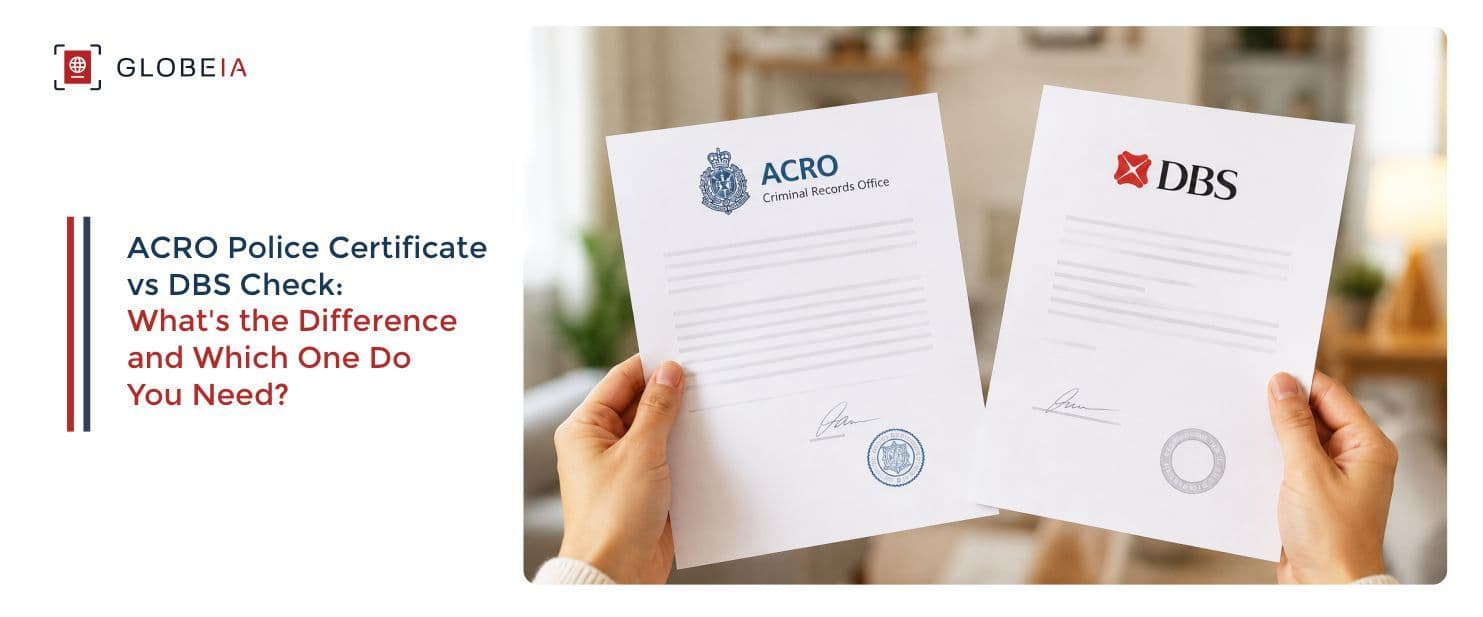
Applying for the wrong UK criminal record document can delay your visa, job application, or overseas relocation. Many people assume an ACRO Police Certificate and a DBS Check are interchangeable because both relate to criminal record information. In reality, they are designed for entirely different purposes, and choosing the wrong one can result in rejected visa applications, employer requests for additional documents, unnecessary costs, and avoidable processing delays.
An ACRO Police Certificate is primarily used for immigration, visa applications, overseas employment, international adoptions, and residency applications, whereas a DBS Check is intended for employment and volunteering within the UK, particularly in regulated sectors such as education, healthcare, childcare, and social care. While both documents may contain criminal record information, they are issued by different authorities, disclose information under different rules, and are accepted by different organizations.
If you're unsure whether you need an ACRO Police Certificate or a DBS Check, you're not alone. This guide explains the key differences between the two documents, when each one is required, who can apply, what information they contain, and why selecting the correct document is essential for your visa, employment, or background screening requirements. By the end, you'll know exactly which document you need - and, just as importantly, when the other one won't be accepted.
| Factor | ACRO Police Certificate | DBS Check |
| Issuing body | ACRO Criminal Records Office | Disclosure and Barring Service |
| Primary purpose | Overseas: visas, immigration, international employment | UK domestic: employment and safeguarding |
| Who can apply | Any individual, no employer needed | Individual (Basic only) or registered employer |
| Geographic coverage | Whole UK via Police National Computer | England and Wales only |
| Accepted by embassies for visa applications | Yes | No in most cases |
| Disclosure framework | ACRO Step-Down Model | DBS Filtering Rules under Police Act 1997 |
| Covers Scottish and military convictions | Always | No |
| Apostille route | Direct to FCDO, no solicitor needed | Solicitor certification required before FCDO |
| Total cost with apostille (DIY) | £120 to £200 | £180 to £250 |
| Standard processing time | Up to 20 working days | Up to 14 working days |
| Fast-track available | Yes, 2 working days at premium price | No individual fast-track |
Many people assume an ACRO Police Certificate and a DBS Check are the same because both relate to a person's criminal record. Both are official UK documents, and both are often referred to as a "police check," "criminal record check," or "background check." While the names sound similar, the documents serve different purposes.
The confusion usually starts when an embassy, immigration authority, or overseas employer asks for a UK police certificate or criminal record check. These are general terms, not the official names of specific documents. Many applicants don't realize that the authority is usually referring to an ACRO Police Certificate, not a DBS Check. As a result, they apply for the wrong document, which can delay their visa, job application, or residency process.
Older terminology also confuses. Before 2012, employment background checks in England and Wales were issued by the Criminal Records Bureau (CRB). Today, the Disclosure and Barring Service (DBS) has replaced the CRB, but many people still use the term "CRB check." At the same time, phrases such as "Criminal Record Check," "police certificate," and "background check" are used interchangeably, even though they may refer to different documents depending on the purpose.
The easiest way to tell them apart is to look at why the document is needed. An ACRO Police Certificate is issued for visa applications, immigration, overseas employment, residency, citizenship, and other international purposes. A DBS Check is used by UK employers when recruiting people for certain jobs, particularly in education, healthcare, social care, childcare, and other regulated roles.
A simple rule can help you choose the right document. If the document is for use outside the UK, you will usually need an ACRO Police Certificate. If it is for a job or volunteering role in the UK, you will usually need a DBS Check. Understanding this difference before you apply can save time, prevent unnecessary costs, and avoid delays in your application.

The ACRO Police Certificate is the official UK document that confirms whether a person has a criminal record. It is used almost entirely for international purposes: visa applications, overseas employment, immigration, permanent residency, citizenship, and adoption processes abroad.
Its formal name is "Police Certificate." Other names people use for it include UK Criminal Record Check, certificate of good conduct, and UK criminal record check for immigration. All of these refer to the same document.
Who Issues an ACRO Police Certificate?
The ACRO Criminal Records Office is a national police unit hosted by Hampshire and Isle of Wight Constabulary. It operates under the National Police Chiefs Council and was set up in 2006 specifically to manage criminal record information for international and cross-border purposes.
Because ACRO is a police authority, the certificate carries a wet-ink official signature that the Foreign, Commonwealth and Development Office recognises directly. This matters when you need the document legalised for overseas use. You can send an ACRO certificate straight to the FCDO for an apostille without needing a solicitor to certify it first. That saves a step, reduces cost, and saves time.
Anyone can apply directly at www.acro.police.uk. No employer needs to be involved.
What Information Does an ACRO Certificate Include?
ACRO searches the Police National Computer, which holds criminal records for England, Wales, Scotland, and Northern Ireland. It is a full UK search, not limited to the area where you lived.
The certificate can show convictions, cautions, reprimands, and warnings held on the PNC. What actually appears depends on ACRO's Step-Down Model, which is explained in full in the key differences section below.
If you have no criminal record, the certificate says "No Trace." If you have a record that has stepped down under ACRO's disclosure rules, it says "No Live Trace." If you have active convictions or cautions, they are listed on the certificate.The certificate is issued only as a physical hard copy. ACRO may send a digital PDF by email in some circumstances, but that PDF cannot be legalised for overseas use. Always confirm you are applying for the physical postal certificate.
When Do You Need an ACRO Police Certificate?
You need an ACRO certificate when a foreign government, embassy, consulate, or overseas authority asks for proof of your UK criminal record. The most common situations are:

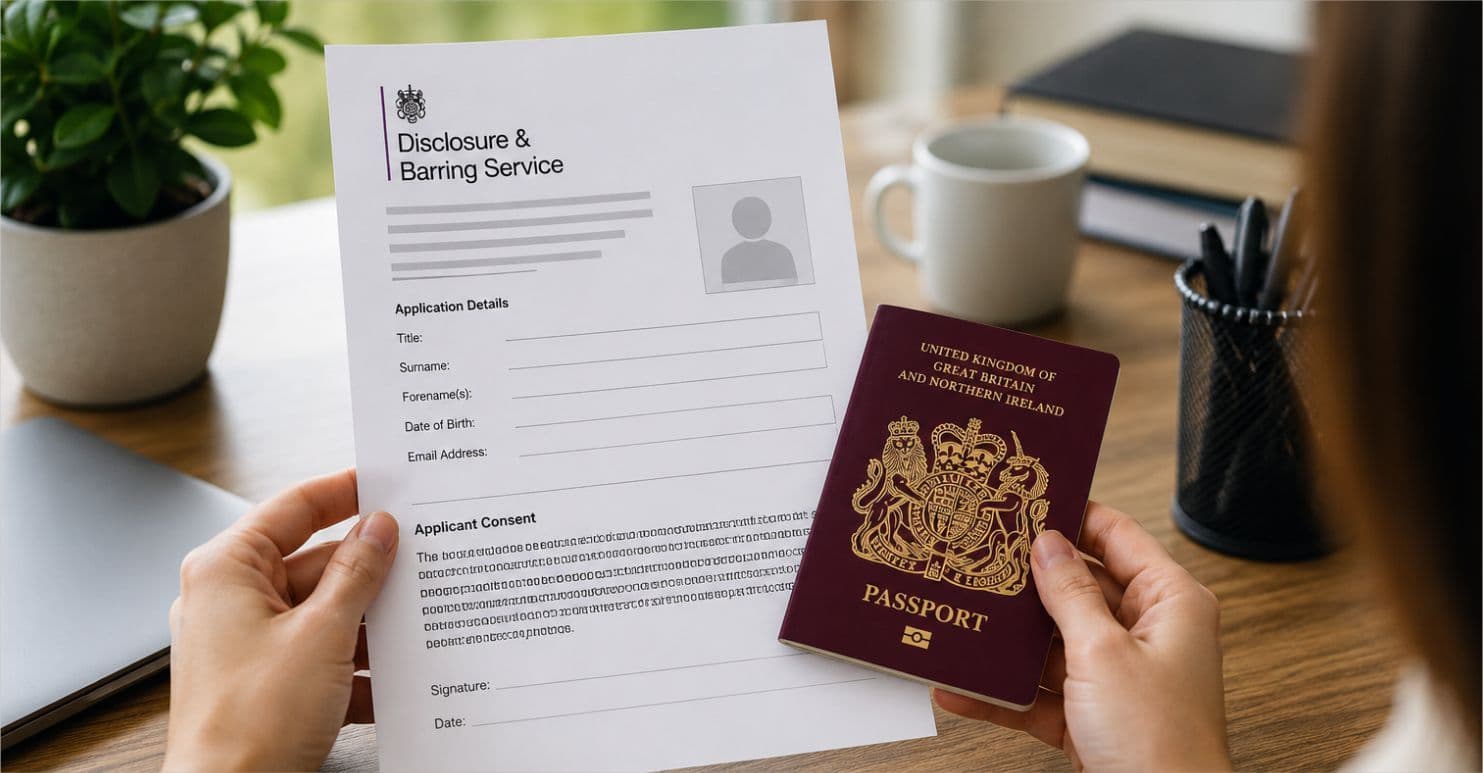
The Disclosure and Barring Service operates under the Home Office. It issues criminal record certificates for UK domestic employment and volunteering, with a particular focus on roles involving children or vulnerable adults.
There are three levels. Each covers different information and is available to different people.
Basic DBS Check
The Basic DBS check shows only current, unspent convictions. Any individual or employer can apply. This is the only level available to individuals who want to apply on their own without needing an employer to initiate the process. When DBS is discussed for overseas use, it is almost always the Basic level that is being considered.
Standard DBS Check
The Standard DBS check shows both spent and unspent convictions, cautions, reprimands, and warnings. It is only available through a registered employer for specific eligible roles. Individuals cannot apply for a Standard check independently.
Enhanced DBS Check
The Enhanced DBS check includes everything in a Standard check, plus any relevant information held by local police forces. For roles involving regulated activity, it also includes checks against the DBS barred lists for children and vulnerable adults. This is the highest level and is only available through a registered employer for the most sensitive roles: teaching, healthcare, social work, and direct work with vulnerable people.
The DBS was built for UK employment. It exists so UK employers can make informed hiring decisions, particularly when someone will work with children or vulnerable adults. It was not built for overseas immigration, and foreign governments are not equipped to interpret or verify it.
1. Purpose: International Use vs UK Employment
The ACRO Police Certificate was built entirely for international use. Every aspect of its design, its security features, its format, and its signature registration with the FCDO exists to serve overseas authorities that need to verify a person's UK criminal record.
The DBS check was built for UK domestic employment and safeguarding. It exists so UK employers, schools, and healthcare providers can carry out pre-employment checks for roles that involve contact with children or vulnerable adults.
These are not two tiers of the same product. They are two completely separate documents serving two completely separate purposes.
2. Issuing Authority and What That Means for Legalisation
ACRO is a national police unit. Its certificates carry an FCDO-recognised wet-ink official signature. The FCDO can verify this signature directly and apostille the document in one step. No solicitor is needed.
The DBS is an executive non-departmental public body under the Home Office. DBS certificates do not carry an FCDO-recognised official signature in the same direct way. Before the FCDO will apostille a DBS certificate, a UK solicitor must certify it first, adding a step, cost, and time to the process.
3. Who Can Apply
Anyone can apply for an ACRO certificate directly, with no employer, no registration, and no sponsorship required.
For DBS, only the Basic check is available to individuals applying on their own. Standard and Enhanced checks must be initiated by a registered employer for an eligible role.
4. Criminal Record Information: The Disclosure Rules Are Completely Different
One of the biggest differences between an ACRO Police Certificate and a DBS Check is how they decide what criminal record information is included. Even if both documents relate to the same person, they may not show the same information.
ACRO Police Certificates Use the Step-Down Model
An ACRO Police Certificate follows its own disclosure system, known as the Step-Down Model. This system is separate from the Rehabilitation of Offenders Act 1974.
Under the Step-Down Model, offences are placed into different categories based on their seriousness. Each category has a set period during which the offence may continue to appear on the certificate. If no further offences are recorded during that time, the offence may eventually stop being actively disclosed.
When this happens, the certificate may show "No Live Trace." This means the police still hold a record of the offence, but it is no longer being actively disclosed on the certificate.
It is important to understand that a conviction becoming spent under the Rehabilitation of Offenders Act does not automatically mean it will stop appearing on an ACRO Police Certificate. The two systems follow different rules and timelines.
In addition, Scottish convictions and military convictions are not covered by the Step-Down Model and may continue to be disclosed according to ACRO's disclosure policies.
DBS Checks Follow Different Disclosure Rules
A DBS Check does not use the Step-Down Model. Instead, it follows the DBS filtering rules set out under the Police Act 1997.
These rules decide which cautions and convictions are included or removed from DBS certificates used for employment and volunteering. Because the DBS filtering rules are different from ACRO's disclosure rules, the information shown on a DBS Check may not match the information shown on an ACRO Police Certificate.
Why This Difference Matters
A conviction that no longer appears on a DBS Check could still appear on an ACRO Police Certificate. Likewise, receiving a clear DBS Check does not automatically mean your ACRO Police Certificate will show the same result.
For this reason, you should always apply for the document specifically requested by your employer, embassy, or immigration authority instead of assuming one can replace the other.
What Information Can Each Document Show?
| Criminal Record Information | ACRO Police Certificate | DBS Check |
| Unspent convictions | Yes | Yes |
| Spent convictions | May be disclosed depending on ACRO's Step-Down Model | May be removed under DBS filtering rules |
| Cautions | May be disclosed depending on ACRO's disclosure rules | May be removed under DBS filtering rules |
| Scottish convictions | May be disclosed under ACRO policies | Not covered |
| Military convictions | May be disclosed under ACRO policies | Not covered |
| Arrests without charge | No | No |
| Local police intelligence | No | Enhanced DBS Check only |
| Barred list information | No | Enhanced DBS Check (for eligible regulated roles only) |
The most important point to remember is that an ACRO Police Certificate and a DBS Check use different disclosure rules. Even though both relate to your criminal record, they are created for different purposes and may contain different information. Always use the document specifically requested for your visa, immigration, or employment application.
5. Where Each Document Is Accepted
ACRO certificates are accepted by embassies, consulates, immigration authorities, and overseas employers worldwide as the standard UK criminal record certificate for international use. ACRO's published FAQ confirms that embassies and high commissions will only accept the ACRO Police Certificate. Presenting a DBS check to an embassy results in rejection.
DBS checks are accepted by UK employers for domestic employment vetting. For overseas use, a DBS check is only accepted where a specific employer, most commonly an international school or UK-affiliated organisation, has asked for one by name and confirmed in writing they will accept it.
6. International Recognition
The ACRO Police Certificate is the UK's recognised format for international criminal record disclosure. Foreign immigration authorities know the format, recognise the security features, and know how to verify it.
DBS certificates carry no equivalent international recognition. Foreign authorities are not set up to interpret them, cannot verify the signature independently, and in most cases have no process for accepting them as criminal clearance documents.
7. Validity and Processing Time
Neither document carries a printed expiry date. The receiving authority sets its own validity window.
For ACRO, the most common windows are: Australia, USA, and New Zealand accept certificates up to 12 months old; Spain and France require certificates no older than 3 months at the time of submission.
| Service Level | ACRO | Basic DBS |
| Standard | Up to 20 working days | 3 to 14 working days |
| Fast-track | 2 working days (premium, £125) | No individual fast-track |
For Visa and Immigration Applications
ACRO Police Certificate. Every country that requires UK criminal clearance as part of a visa or immigration process expects ACRO format. Australia, Canada, the USA, New Zealand, Spain, France, Portugal, Germany, Italy, the UAE, Saudi Arabia: none of them accept a DBS check as a substitute.
For Overseas Employment
If an overseas employer has not specified which document they want, default to the ACRO Police Certificate. It is the internationally recognised option. Most overseas employers in healthcare, education, security, and professional services expect ACRO.
If the overseas employer has specifically asked for a DBS check by name and confirmed in writing they will accept it, apply for the DBS level they specified.
For Jobs in the UK
DBS check. The level depends on the role. Employers initiate Standard and Enhanced applications through their own registered accounts. You can apply for a Basic DBS yourself at gov.uk/request-copy-criminal-record.
For Teachers and Healthcare Workers Going Abroad
In most cases, both documents.
The ACRO certificate covers your criminal record for the visa and immigration process. Some countries and some school networks additionally require an Enhanced DBS for safeguarding compliance. International schools in the UAE, Vietnam, China, South Korea, and Thailand commonly ask for both.
Start both applications at the same time. They run on separate timelines and neither one waits for the other.
For Volunteering
For UK-based volunteering, a Basic or Enhanced DBS is the standard document depending on the organisation's requirements.
For volunteering abroad, check with the specific organisation. If they are overseas-based and require criminal clearance, they will usually want ACRO. If they are a UK-registered organisation operating internationally, they may use DBS for their internal safeguarding records.
For Permanent Residency and Citizenship Applications
ACRO Police Certificate. Australia, Canada, New Zealand, and EU member states all require ACRO format for the UK component of criminal clearance in residency and citizenship applications.
Most overseas authorities require an apostille attached to the certificate before they will accept it. An apostille is an official certificate that confirms a document is genuine. In the UK, the FCDO Legalisation Office in Milton Keynes issues apostilles.
The process differs between ACRO and DBS.
For ACRO, you send the original certificate directly to the FCDO. No solicitor is needed. The FCDO verifies the ACRO official's signature and attaches the apostille. The government fee is £45. Standard postal processing currently runs at 20 to 25 working days. Using an apostille agent with direct FCDO counter access reduces this to 1 to 5 working days.
For DBS, a solicitor must certify the certificate before the FCDO will apostille it. The solicitor certifies a copy of the original DBS, and that copy goes to the FCDO. This adds solicitor fees of £50 to £100, extends the timeline, and increases total cost. Even after all of that, most overseas immigration authorities will reject the apostilled DBS because they expect ACRO format.
| ACRO | DBS | |
| Solicitor needed before FCDO | No | Yes |
| FCDO apostille fee | £45 | £45 |
| Total cost with apostille (DIY) | £115 to £120 | £180 to £250 |
| Accepted by embassies after apostille | Yes | No in most cases |
No.
ACRO's FAQ states this directly. Embassies and high commissions will only accept the ACRO Police Certificate for immigration purposes. A DBS check, with or without an apostille, will not satisfy a visa or immigration authority that has asked for a UK police certificate.
If you submit a DBS check to an embassy when they asked for a UK police certificate, your application will be rejected. You then have to apply for an ACRO certificate from the beginning, restart the processing timelines, and in some cases rebook visa appointments that can take months to reschedule.
The only context where a DBS check works internationally is when a specific overseas employer has asked for it by name and confirmed in writing they accept it. Even then, it serves that employer's internal purposes. It does not replace the ACRO certificate if a visa or immigration authority is separately involved.
For UK employment purposes requiring a Standard or Enhanced DBS check, no.
UK employers cannot accept an ACRO Police Certificate in place of a DBS check for safeguarding-sensitive roles. DBS checks, particularly at Enhanced level, include local police intelligence and barred list checks that an ACRO certificate does not contain. The DBS framework is embedded in UK employment law for certain roles and cannot be substituted.
For basic employment screening where a UK employer simply wants evidence of criminal record status and has not specified a DBS format, an ACRO certificate may be useful as supporting information. But it is not the standard document that UK domestic safeguarding frameworks recognise.

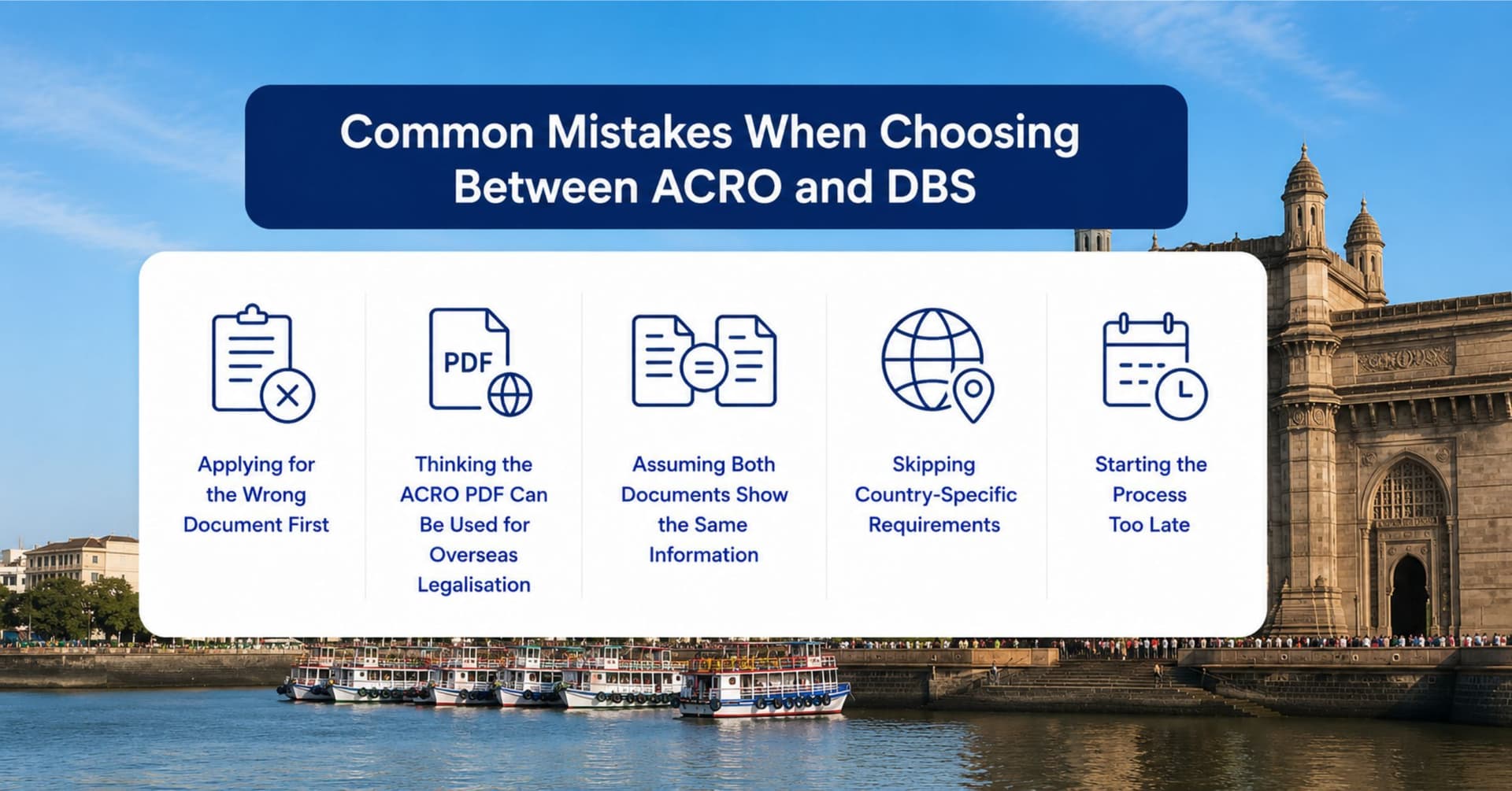
Applying for the Wrong Document First
This is the most common mistake, and it costs weeks. Someone needs an ACRO certificate for a visa. They search for "UK criminal record check," find a DBS provider, apply, wait up to four weeks, and then discover the embassy will not accept it.
Read the exact wording from the requesting authority. If it says "UK police certificate," "Criminal Record Check," or "certificate of good conduct," that is ACRO.
Thinking the ACRO PDF Can Be Used for Overseas Legalisation
ACRO sometimes sends a digital PDF of the certificate by email. This PDF cannot be apostilled. The FCDO only processes the original physical hard copy with the wet-ink signature.
If you receive a PDF and need the document legalised for overseas use, contact ACRO and request the physical hard copy. This catches many applicants who believe they have received their final certificate when the PDF arrives.
Assuming Both Documents Show the Same Information
ACRO and DBS use different disclosure frameworks. A conviction filtered from a DBS certificate under the DBS Filtering Rules may still appear on an ACRO certificate under the Step-Down Model. If you have any police history and need both documents, do not assume the results will match. Check each one separately.
Skipping Country-Specific Requirements
Some countries require the ACRO certificate to be translated into the local language before submission. Spain requires a certified Spanish translation. France requires French. Portugal requires Portuguese. Submitting an apostilled ACRO certificate without the required translation results in rejection, regardless of how complete the rest of the application is.
Always check the specific requirements for your destination country before submitting any documents.
Starting the Process Too Late
Standard ACRO processing takes up to 20 working days. FCDO apostille processing currently runs at 20 to 25 working days. Combined with postal transit at each stage, the total DIY process from application to receiving an apostilled certificate takes 10 to 14 weeks.
Many applicants start too late, especially when a fixed visa appointment date is involved. If your deadline is within 8 weeks, use the ACRO premium service (2 working days) and an apostille agent with FCDO counter access (1 to 5 working days) rather than the standard postal route.
Once you know what each document is for, the decision is simple.
Going abroad, applying for a visa, moving for work internationally, or applying for residency or citizenship: ACRO Police Certificate.
Applying for a job in the UK, volunteering in the UK, or working in a UK-registered role that requires safeguarding checks: DBS check. Apply for a Basic at gov.uk/request-copy-criminal-record, or ask your employer to initiate a Standard or Enhanced check through their registered account.
Teaching or working in healthcare internationally: you likely need both. ACRO for the visa and immigration authority. DBS if your specific employer has asked for it.
Not sure which one a specific authority wants: contact them directly and ask for written confirmation of which certificate they require. Do not guess. The wrong document costs weeks. In some situations it costs a visa appointment that cannot be quickly rebooked.
The ACRO certificate is not better than the DBS check. The DBS check is not better than the ACRO certificate. They each do their job well within the purpose they were designed for. The only mistake is using one where the other is needed.


Global Services
State Services