Wrong card in Prague, then back to Step 1
- Day 1Prints from a service she found online.
A shop in Žižkov rolls her prints. Nobody explains which form the RCMP needs or how the card reaches Canada.
- Next stepSent on the wrong form.
Her prints were taken on an FD-258 instead of the official C-216C form. She has to be fingerprinted again and restart the process.
- Result issuedA result without the required apostille.
Her application needs a Canadian apostille. She learns that it must be obtained through Global Affairs Canada.
- LaterTranslation still missing.
The Czech Ministry of the Interior also expects a sworn Czech translation. She now has to find a court translator for the apostilled document.
- Final stageEmployee card file goes in late.
Separate providers, document steps and follow-ups push her application behind her start date.
One visit in Prague, her whole file handled
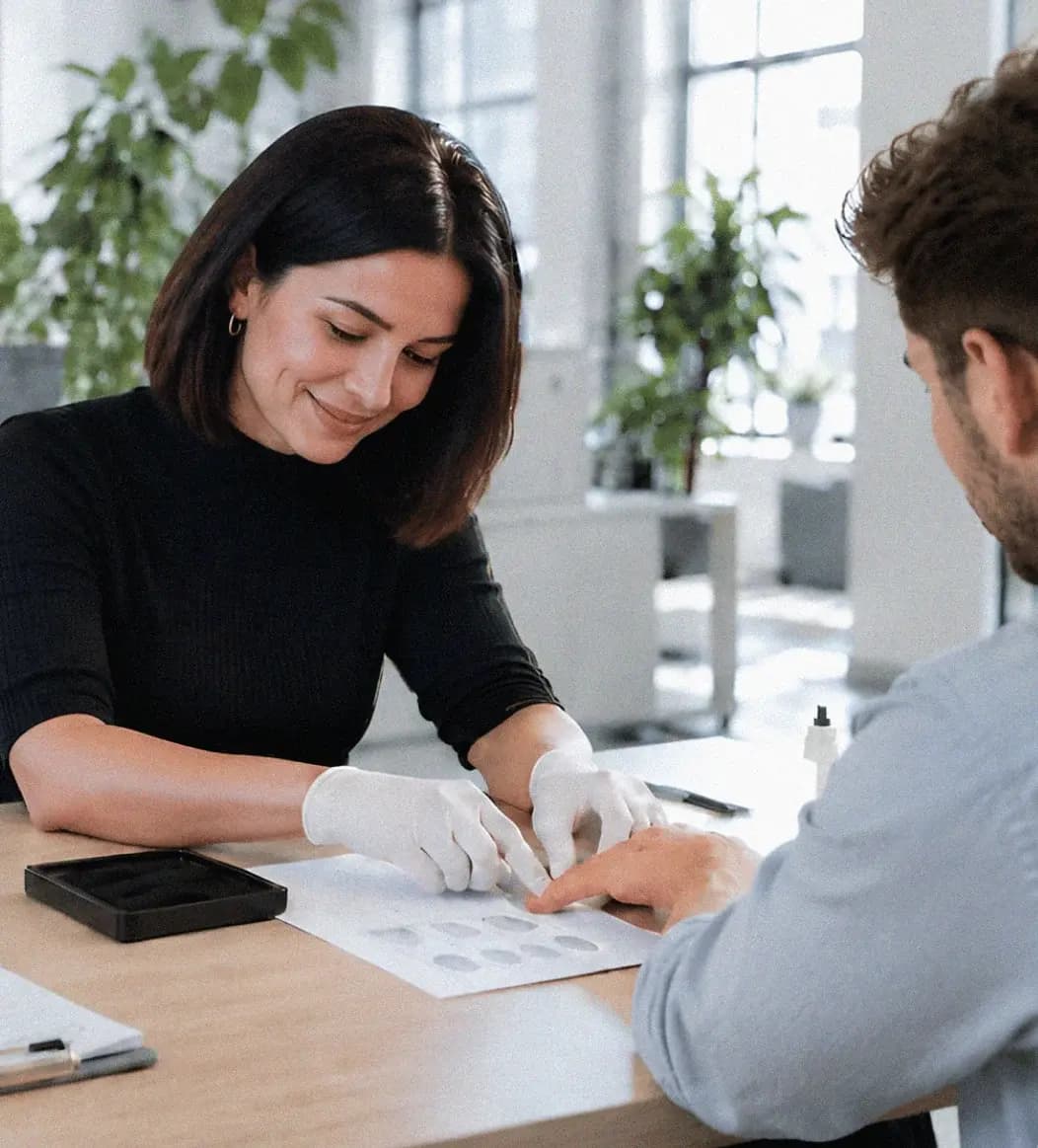
- Day 1Fingerprints taken at home in Prague.
A trained associate checks her two government-issued IDs and takes her ink fingerprints on the official C-216C form.
- Next stageOriginal card reaches Toronto.
Her C-216C and CCRTIS-approved consent form go to Globeia Incorporated in Toronto, which submits her fingerprints to the RCMP.
- Result issuedResult received and checked.
The RCMP issues Nadia's result, and Globeia keeps her updated through SmartPortal.
- Next stageApostille and translation arranged.
If required, we order the Global Affairs Canada apostille first and the sworn Czech translation second.
- Final stageReady for the Ministry of the Interior.
Nadia has the documents her employee card application needs, without coordinating each stage herself.