State Apostille Services from USA
Apostille Services in California
Apostille Services in Texas
Apostille Services in Florida
Apostille Services in Washington
Services from Canada
Services from United Kingdom
Services from New Zealand

Every year, thousands of applicants discover that obtaining an FBI Background Check involves more than simply submitting fingerprints. Whether you're applying for a Digital Nomad Visa, permanent residency, citizenship, employment, adoption, or professional licensing, requirements can vary depending on where the document will be used. From FBI fingerprint submissions and processing times to apostille requirements and international acceptance, this updated 2026 FAQ guide answers the questions applicants ask most before starting their application.
Before applying for an FBI Background Check, it's important to understand what an FBI Identity History Summary is, when it's required, and how the process works. Below, we've answered the most basic questions about FBI criminal record checks:
1. What is an FBI background check?
An FBI background check officially called an FBI Identity History Summary, is a federal criminal history report issued directly by the Federal Bureau of Investigation. It searches the FBI's national criminal database for any arrests, prosecutions, or dispositions associated with your fingerprints and identifying information. Unlike state-level background checks, which are limited to records within a single state, an FBI background check searches nationwide federal databases, making it the most comprehensive and widely accepted form of criminal background verification in the United States.
For international use, the FBI Identity History Summary is the standard document required by foreign immigration authorities, employers, licensing bodies, and courts precisely because it carries federal authentication and covers the full scope of US criminal records.
2. Who needs an FBI background check?

An FBI background check is required in a wide range of situations involving identity verification and criminal history disclosure. The most common include:
3. What’s the difference between an FBI criminal record check and a state criminal background check?
An FBI criminal record check searches the FBI's nationwide criminal database covering all 50 states, federal crimes, and interstate offences. A state background check searches only the records held within a single state's jurisdiction and will not capture crimes committed in other states or at the federal level.
For international use, foreign authorities almost universally require the FBI background check rather than a state check because it carries federal authentication and provides a complete national picture of an applicant's US criminal history. A state check is generally sufficient only for local employment or state-level licensing within the United States.
4. How long is an FBI background check valid?
FBI background checks don’t have an official expiration date, but most organizations and countries that require them specify their own validity periods. Typically, FBI background checks are considered valid for 6 months to 1 year from the issue date, depending on the requesting organization’s requirements.
For international use, different countries have varying validity requirements. Some accept FBI background checks that are up to 6 months old, while others require documents issued within 90 days. It’s essential to check the specific requirements of your intended use before applying.
5. Can I get an FBI identity history check on myself?
Yes, you can absolutely request your own FBI background check through the Identity History Summary process. This is actually the most common way individuals obtain FBI background checks for personal use, employment, or international applications.
The process requires you to submit your own fingerprints, complete the appropriate forms, and pay the required fees. You cannot request someone else’s FBI background check without proper legal authorization, as this would violate federal privacy laws.
6. What information appears on an FBI background check?
An FBI background check includes arrests, prosecutions, and dispositions reported to the FBI by law enforcement agencies. This may include felony and misdemeanor convictions, pending charges, and in some cases, arrests that didn’t result in convictions.
The report shows dates of arrests, charges filed, court dispositions, and sentencing information when available. However, the completeness of information depends on what local agencies have reported to the FBI, so some records may be incomplete or may have missing disposition information.
7. Will sealed or expunged records appear on my FBI background check?
Depending on the jurisdiction and type of sealing, or expunged records may still appear on FBI background checks. Federal databases don’t automatically update when state courts seal or expunge records, so these records often remain visible on FBI reports.
If you have sealed or expunged records that appear on your FBI background check, you may need to provide additional documentation to requesting organizations explaining the legal status of these records. Some jurisdictions provide certificates of disposition that can help clarify the current legal status of old charges.
8. Can I dispute incorrect information on my FBI background check?
Yes, if you find incorrect information on your FBI background check, you can request corrections through the FBI’s Challenge process. This involves submitting documentation that proves the information is incorrect, such as court records showing different dispositions or proof of identity theft.
The Challenge process can take several weeks or months to complete, so it’s important to request your FBI background check well before you need it. This allows time to address any inaccuracies before submitting it to employers or government agencies.
9. What does a "no record" result mean on an FBI background check?
If your FBI background check shows “no record,” this means the FBI has no criminal history information associated with your submitted fingerprints and identifying information. This is the most favorable result and indicates no federal criminal records are associated with your identity.
10. Do I need an FBI background check or a state background check- how do I know which one?
For international use including visas, foreign immigration, overseas employment, and professional licensing abroad, an FBI background check is always required. Foreign authorities do not accept state-level checks because they only cover one state and carry no federal authentication.
For domestic purposes such as local employment, state professional licensing, or certain volunteer programs within the United States, a state background check may be sufficient.
If you are unsure which document is required, always confirm directly with the authority or organisation requesting the check before you apply. Obtaining the wrong document causes delays and requires starting the process again from the beginning.
Before applying for an FBI Identity History Summary, it’s important to understand the required documents, forms, and basic application steps. Most applications are built around your fingerprint submission, personal identification details, and correct supporting information.
Ensuring everything is completed accurately helps avoid delays, rejections, and unnecessary resubmissions.
11. What forms do I need to complete for an FBI background check?
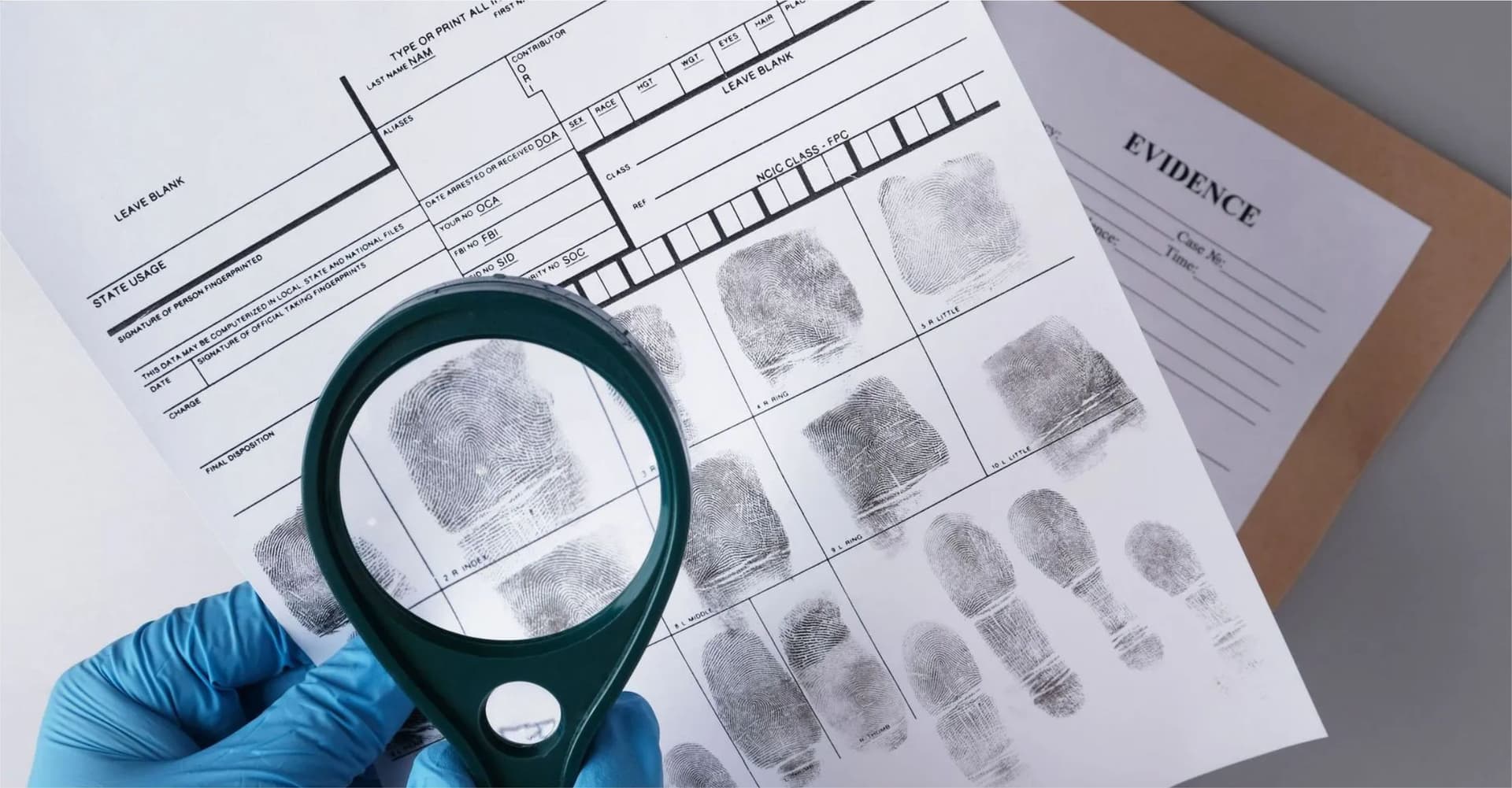
You only need to provide your fingerprints on an FD-258 fingerprint card or FD-1164 form, along with basic personal details such as your name and date of birth.
These fingerprint cards are the primary requirement for an FBI Identity History Summary check. Depending on the submission method, additional applicant details may also be required, but the FD-258/FD-1164 fingerprint submission is the core document.
12. What personal information is required on the FBI background check application?
The FBI background check requirements include your full legal name, date of birth, place of birth, Social Security number, and current address. You must also provide all previous names you’ve used, including maiden names, aliases, or legal name changes.
The application requires information about your reason for requesting the background check and where the results should be sent. All information must match exactly with your identification documents and fingerprint submissions to avoid processing delays.
13. What identification documents are required for an FBI background check?
A copy of one valid government-issued photo identification is required with your application. The document must be current and clearly show your full name, date of birth, and photograph. A valid passport is the most universally accepted form of identification, particularly for international applicants. A national identity card or driver's licence are also commonly accepted.
Two points worth noting for international applicants specifically:
First, if your current legal name differs from the name on your identification due to marriage, divorce, or a legal name change, you must include supporting documentation such as a marriage certificate, divorce decree, or court order alongside your application.
Second, if you are working with a professional fingerprinting service like Globeia, two valid government-issued IDs are required at your appointment, with at least one showing your full name, date of birth, photograph, and signature. Photocopies of both IDs are required for submission purposes.
14. Do I need to provide my Social Security number for an FBI background check?
No, a Social Security number is not required for an FBI Identity History Summary check. If you have one, you may include it to help with identification, but many applicants successfully apply without it.
The FBI primarily uses your fingerprints and personal details such as your name and date of birth to process your request.
15. What if I’ve lived in multiple states or countries?
You should list all addresses where you’ve lived on your application, including international addresses. This information helps the FBI conduct a more thorough search and ensures all relevant records are included in your background check.
For international addresses, provide as much detail as possible, including the country and approximate dates of residence. This information is particularly important if you’ve been arrested or had legal issues in multiple jurisdictions.
16. How do I submit an FBI background check application?

The FBI allows you to apply online through its official edo.cjis.gov portal, which lets you complete the application, pay electronically, and receive your results in as little as 3–5 business days. If you already have digital fingerprints, you can upload them directly; if not, you’ll need to mail in a printed FD-258/FD-1164 fingerprint card after completing your online request. You can also choose the traditional mail-in method or go through an FBI-compliant company or authorized services like Globeia, which can offer faster processing and additional support options, but timelines and fees vary depending on the provider and application type.
17. What are the accepted payment methods for an FBI background check?
Payment requirements depend on how you submit your application:
18. What happens if my FBI background check application is incomplete or rejected?
If an FBI Identity History Summary submission is incomplete or incorrect, it will be returned without processing. Common issues include unclear or smudged fingerprints, missing applicant details, incorrect or missing signature, or using an outdated fingerprint card format (FD-258/FD-1164).
In such cases, the application must be corrected and resubmitted, including new fingerprint impressions and any required fees. This results in a full restart of the processing timeline, which can delay visa, employment, or immigration deadlines.
Careful preparation and correctly taken fingerprints significantly reduce the risk of rejection or delay.
19. Can someone else submit my FBI background check application on my behalf?
The fingerprints must be your own and must be collected in person- this cannot be delegated. The application forms must also be signed by you personally. Falsifying information on an FBI application is a federal offence.
However, the physical act of mailing your completed application can be done by a representative. Professional services like Globeia handle the coordination of fingerprint collection, application preparation, and submission on behalf of applicants- particularly useful for those outside the United States who cannot easily navigate direct FBI submission. Globeia's role is coordination and submission support- the FBI independently processes all applications and issues all results.
20. How should I package and send my FBI background check application by mail?
If submitting directly to the FBI by mail, package your application as follows:
For international applicants mailing from outside the United States, use a reliable international courier with tracking. Factor in transit time when planning your overall timeline, as international mail to West Virginia can take one to three weeks in each direction before FBI processing even begins.
FBI fingerprinting requires clear, legible prints taken on an official FD-258 or FD-1164 card, either by ink or approved electronic capture methods. Proper technique and complete impressions are essential to avoid delays or rejection in processing.
21. Where can I get fingerprints taken for an FBI background check?

Where you get fingerprinted depends entirely on where you are located.
If you are inside the United States: Fingerprints can be taken at local law enforcement agencies, US Post Office locations offering fingerprinting services, or through FBI-approved electronic fingerprint providers. Electronic submission through the FBI's eDO portal is available for applicants within the US and produces faster results than mail-in ink card submissions.
If you are outside the United States: You can still access the FBI’s eDO portal online, but fingerprints cannot be submitted electronically from outside the U.S. Instead, you must use an FD-258 or FD-1164 ink fingerprint card, which is then mailed to the FBI for processing.
Local police stations outside the U.S. often do not stock FBI-specific fingerprint cards or follow FBI formatting standards, which can lead to rejections. Professional fingerprinting services like Globeia provide mobile ink fingerprint collection at your home or office in your country, using official FD-258 or FD-1164 cards. Completed cards are mailed to Globeia Inc. in the USA, where they are processed and submitted to the FBI on your behalf.
22. What is the difference between electronic fingerprinting and ink card fingerprinting for an FBI background check?
Electronic fingerprinting (Livescan): Captures fingerprints digitally using a scanner and submits them electronically to the FBI through approved US-based systems. It produces high-quality impressions and allows instant quality checks so poor prints can be corrected immediately. However, this method is generally available only through FBI-approved providers within the United States.
Ink card fingerprinting (FD-258 or FD-1164): Uses black ink to capture rolled fingerprints on an official paper card. This is the standard method used by applicants outside the United States. When taken correctly by a trained professional, ink fingerprints fully meet FBI requirements. The completed card is then mailed to the United States for processing.
Key quality factors: Clarity of ridge detail, correct rolling technique, and full impressions for all ten fingers are essential. Each print should be reviewed on-site and retaken if needed before the card is sealed for submission.
23. How much does fingerprinting cost for an FBI background check?
The total cost of an FBI background check depends on where you complete your fingerprinting and which services you use. The FBI charges a fixed $18 per Identity History Summary request, which applies whether you apply online or by mail and is set directly by the FBI. This fee does not include fingerprinting or any additional services. Fingerprinting costs vary depending on the provider and location, especially for ink fingerprinting outside the United States, where service fees may include appointment handling, official FD-258 or FD-1164 card preparation, and quality checks. If you require additional services such as apostille, sworn translation, or courier delivery, these are charged separately by the relevant authorities or service providers based on your specific requirements.
24. What happens if my fingerprints are rejected by the FBI?
If your fingerprints are rejected due to poor quality, you’ll need to be re-fingerprinted and resubmit your application. Rejections can happen because of smudges, dry or scarred skin, worn ridges, or errors in the process. While this can occur with both ink and digital methods, live scan usually improves accuracy.
If prints are rejected twice for quality issues, an authorized agency, not the applicant, may request a Name Check using personal details instead of fingerprints. This must be done within a set timeframe after the second rejection. The FBI does not offer Name Checks directly to individuals. In rare situations where fingerprints cannot be captured at all, a rejection letter may be issued, though it is not the same as an official background check.
25. Can I reuse fingerprints taken for another purpose for my FBI background check?
Fingerprints taken for other purposes (such as employment or licensing) cannot be used for FBI background checks. Each background check request requires fresh fingerprints taken specifically for that purpose, using the correct FBI forms and procedures.
This requirement ensures the integrity of the background check process and prevents the use of potentially compromised or outdated fingerprint records. You’ll need to schedule new fingerprinting for each FBI background check request.
FBI background check processing times vary depending on the submission method, with electronic applications faster than mail-in fingerprint cards. Actual timelines are determined by the FBI and can also be affected by application volume, accuracy of fingerprints, and delivery time.
26. How long does an FBI background check take to process?
An FBI Identity History Summary takes 1-3 business days to process if submitted electronically through the FBI’s eDO system. For applicants submitting ink fingerprint cards by mail, processing usually begins once the FBI receives the physical cards, and overall timelines can range from a few days up to 2-4 weeks, depending on volume and mail transit time. Processing times are determined entirely by the FBI and vary based on application volume, individual circumstances, and submission method.
27. What factors affect FBI background check processing time?
Several factors influence how long your FBI background check takes, none of which Globeia or any fingerprinting service can control or influence:
The most effective way to keep your timeline as short as possible is ensuring your application is accurately prepared and your fingerprints are high quality before submission, errors at the collection stage are the single most controllable source of delay.
28. Is expedited FBI background check processing available?
The FBI does not provide expedited processing for standard Identity History Summary requests. However, FBI-approved channelers and trusted professional services like Globeia can help you obtain results much faster, often within 48 hours, for an additional fee. While these services cost more than submitting directly to the FBI, they are an excellent option for applicants with urgent deadlines.
Globeia has years of experience and specialized expertise in expediting FBI background checks, ensuring your application is handled accurately and that you receive your results as quickly and securely as possible.
29. How can I check the status of my FBI background check?
Unfortunately, the FBI does not provide a status tracking system for individual Identity History Summary requests. Once you submit your application, you’ll need to wait for the results to arrive by mail or email, depending on your submission method.
Checking your FBI background check status is only possible through a professional service like Globeia, who offer online tracking systems. If you submitted directly to the FBI, your only option is to wait for the processing timeline to complete.
30. What should I do if my FBI background check is taking longer than expected?
If your FBI background check is taking longer than expected, first confirm that your application has been successfully delivered to the FBI using your tracking information. If it has been received but you have not received a response beyond the standard processing timeframe listed by the FBI, you may contact the FBI’s Identity History Summary support team for assistance.
Before contacting them, check whether any correspondence has already been sent, including returned applications requiring correction, and ensure your mailing address was entered correctly. If you applied electronically, also check your email inbox and spam folder for updates or notifications.
Keep in mind that the FBI receives thousands of requests daily, and processing times can vary. Avoid submitting duplicate applications, as this can actually slow down the process and create confusion in their system.
The cost of an FBI background check is set by the FBI at a fixed fee, with additional charges depending on your chosen submission method and any extra services required. Payment options vary based on whether you apply online, by mail, or through a service provider.
31. What does an FBI background check cost in 2026?
In 2026, the FBI charges a fixed fee of $18 per Identity History Summary request, which is set by the FBI and applies whether you apply online through the eDO system or by mail using FD-258 or FD-1164 fingerprint cards. This fee only covers the FBI processing and does not include fingerprinting, courier services, apostille, or sworn translation costs, which vary depending on the provider and location.
32. What additional costs should I expect beyond the FBI processing fee?
Beyond the standard FBI fee, you may also incur additional costs for fingerprinting, postage, and apostille services if your background check is intended for international use. If you choose to use a professional FBI check service for faster processing, expect to pay additional service fees.
For international applications, apostille certification is handled through the U.S. Department of State, and you may face extra charges if you request expedited apostille processing.
33. Is the FBI processing fee the same for all applicants regardless of location?
The FBI processing fee is the same regardless of where you submit your application - $18 for all standard Identity History Summary requests. However, fingerprinting costs and channeler fees can vary significantly by location and service provider.
Urban areas have more fingerprinting options and competitive pricing, while rural areas may have limited options and higher costs. Research local options to find the best combination of cost and convenience for your needs.
34. What happens if I send the wrong payment amount to the FBI?
If you send the wrong payment, your application will not be processed. The FBI requires the exact fee amount, and only certain payment methods are accepted (certified check, money order, or the official credit card form). Cash, personal checks, or business checks are not accepted and will not be returned.
To avoid delays, always confirm the current fee on the FBI’s website and submit the exact amount in an approved form.
An FBI Identity History Summary often requires an apostille for international use, especially for visas, work permits, or residency applications. The apostille certifies the document’s authenticity so it can be legally accepted in countries that are part of the Hague Apostille Convention.
35. What is an FBI apostille, and when do I need one?
An apostille is an official authentication certificate that makes a document legally recognised in countries that participate in the Hague Apostille Convention. When applied to your FBI Identity History Summary, it confirms that the document was issued by a recognised US federal authority and can be accepted by foreign governments, employers, universities, and courts without further legalisation.
You need an apostille on your FBI Identity History Summary when:
You may not need an apostille when:
Always confirm the exact requirement with the authority requesting the document before beginning the apostille process. Requirements vary by country, visa category, and institution..
36. How do I get an apostille for an FBI background check?
An FBI Identity History Summary is a federal document, so it can only be apostilled by the U.S. Department of State Authentication Office. State-level authorities cannot apostille FBI documents, which is a common mistake that leads to rejections and delays.
Correct apostille process for an FBI background check:
First, obtain your original FBI Identity History Summary from the FBI. Then complete Form DS-4194 (Request for Apostille or Authentication) and submit it along with your original FBI report and the applicable fee to the U.S. Department of State Office of Authentications in Washington, D.C. The department will verify the document and attach the apostille before returning it.
The apostille is issued only on the original FBI document- photocopies are not accepted. Always retain a copy before sending your original for legalization.
37. How long does the FBI background check apostille process take?

The apostille process is handled by the U.S. Department of State Office of Authentications and processing times vary depending on the submission method and workload. Applicants should always consider both processing time and international courier delivery when planning their timeline.
Current approximate processing times (as published by the U.S. Department of State):
These timeframes apply only to apostille processing. International shipping to and from the United States is additional and varies based on courier service and destination country.
For international applicants, the full end-to-end timeline including FBI processing, international shipping, and apostille issuance, can take several weeks to a few months. It is recommended to begin the process well in advance of any visa, immigration, or employment deadline. Expedited apostille processing is available with third-party FBI apostille services like Globeia for an additional fee and usually takes 2-3 weeks.
38. How much does an FBI background check apostille cost?
The cost of an apostille for an FBI background check depends on the U.S. Department of State fee structure, which is separate from both the FBI processing fee and any fingerprinting or service charges. The U.S. Department of State charges a per-document apostille fee (typically around $20 per document), though this amount can change, so it should always be verified on the official State Department website before submission.
In addition to the government fee, applicants should also account for international courier costs to send documents to Washington, D.C. and receive them back, as well as any optional service fees if using a third-party provider to coordinate the process.
39. Can a state Secretary of State apostille my FBI background check?
Generally, FBI background checks must be apostilled by the U.S. Department of State, since they are federal documents. Most states can only apostille their own documents, like birth certificates or state background checks. In rare cases, a state may issue an apostille on a notarized copy of your FBI background check (state apostille), while a federal apostille is issued on the original.
Acceptance of a state apostille depends on the destination country. Services like Globeia can help notarize and process state apostilles to ensure your document is valid for international use.
40. How can I manage the FBI background check and apostille process efficiently from outside the United States?
To speed up the FBI background check and apostille process, planning and choosing the right service is key. Third-party providers, like Globeia, specialize in handling both steps in a single streamlined process. They help you complete the FBI application, schedule electronic fingerprints, and submit documents for apostille without needing to visit multiple offices. These services save time, reduce travel, and ensure forms are filled correctly to prevent delays. By using Gloebia’s FBI Background Check and Apostille Services, you can manage your entire background check and apostille workflow efficiently, directly from your home or office.
Overall, successfully completing an FBI background check and apostille process depends on careful preparation, accurate documentation, and allowing sufficient time for each stage, from fingerprint submission to FBI processing and final authentication. Since each step follows strict procedures and separate timelines, early planning is essential to avoid delays, especially for visa, immigration, or employment deadlines. For applicants who prefer a smoother and more coordinated experience, services like Globeia can manage the end-to-end process including fingerprint collection, FBI submission coordination, and apostille support, helping reduce errors, save time, and simplify international document requirements.


Global Services
State Services