

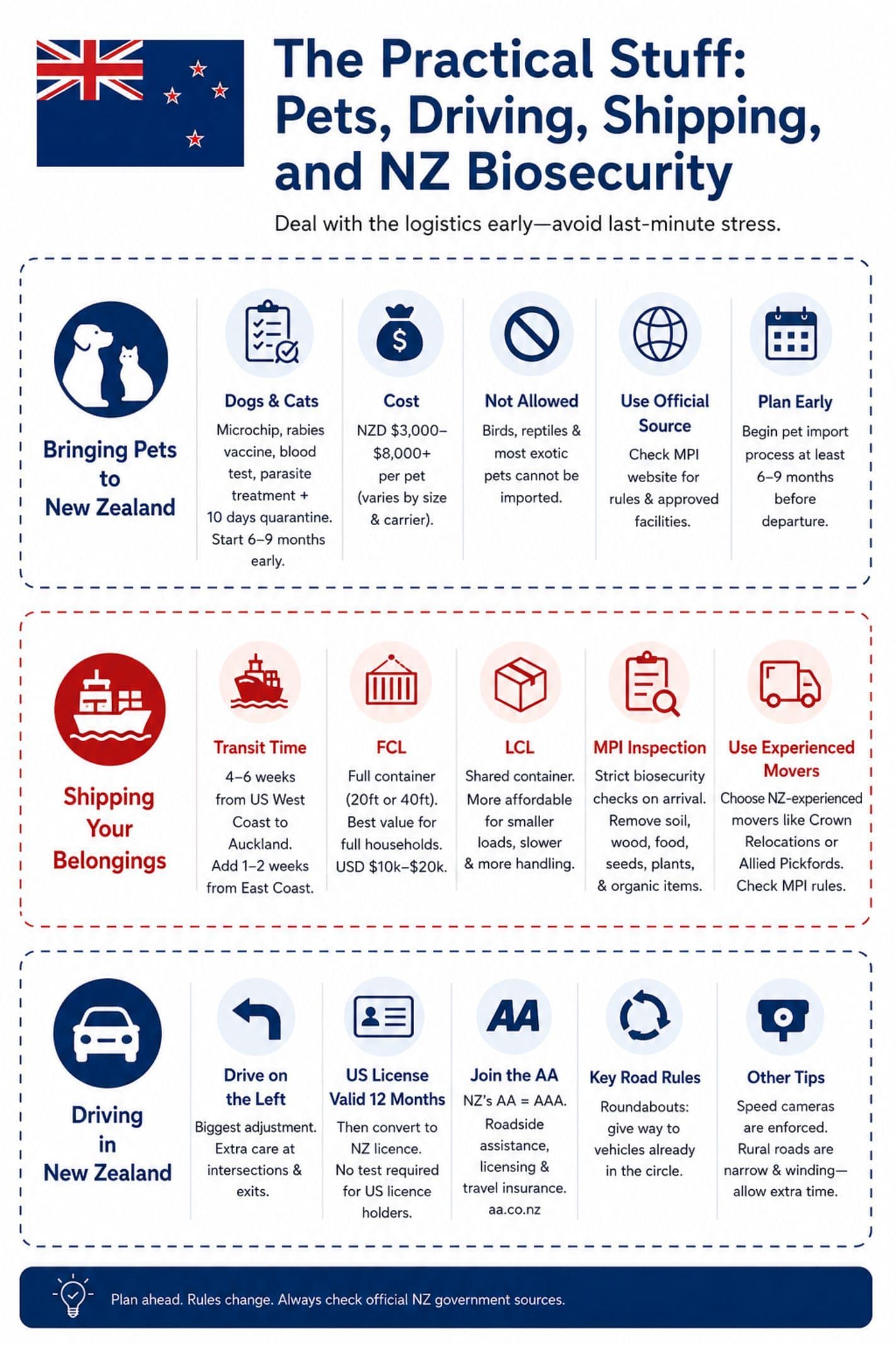
These are the logistics most people underestimate until they are three months from departure and suddenly panicking. Deal with them early.
New Zealand has some of the strictest biosecurity requirements in the world for animal imports. The country has been geographically isolated for 80 million years and maintains strict controls to protect its unique ecosystem. When it comes to pets, "strict" understates it.
Dogs: Your dog must be microchipped, vaccinated against rabies, have a certified rabies neutralising antibody titre test (RNATT) showing adequate immunity, and undergo treatments for parasites. After meeting all pre-departure requirements, dogs must spend a minimum of 10 days in an MPI-approved quarantine facility in New Zealand on arrival. The entire process, from starting treatment to arrival, takes at least six months. Starting early is not optional it is required.
Cats: Similar requirements apply. Microchipping, rabies vaccination, RNATT testing, parasite treatment, and mandatory quarantine in an MPI-approved cattery.
Cost: Plan for NZD $3,000 to $8,000 or more per pet, including quarantine facility fees, vet preparation costs, and international freight. The variation depends on the size of the animal and the freight carrier.
Birds, reptiles, and most exotic pets: These pets cannot be imported into New Zealand. New Zealand's biosecurity rules are strict enough that many species cannot enter at all, regardless of how long you have owned them or what documentation you provide.
MPI's official page on importing pets has the full requirements and approved facilities list. Use this as your primary source the rules update regularly.
Begin the pet import process at least 6–9 months before your planned departure date.
The sea journey from the US West Coast to Auckland takes roughly 4–6 weeks. From the East Coast, add another 1–2 weeks.
Full container (FCL) - you fill a 20-foot or 40-foot container with your household goods. Best value if you have a full household of furniture. Cost: USD $10,000–$20,000 depending on origin port and container size.
Shared container (LCL) - your goods share space with others. More affordable for smaller loads but slower and with more handling, which increases the risk of damage.
When your goods arrive in New Zealand, they go through MPI (Ministry for Primary Industries) inspection at the port. MPI is serious about what enters the country. Items that trigger inspection or seizure include: soil on anything (clean your garden tools obsessively), wood products with bark or soil, untreated wooden pallets, certain food items, dried flowers, seeds, and anything with organic material attached. A good international shipping company with NZ experience will brief you on what to clean, treat, or simply leave behind.
Recommended international movers with New Zealand routes include Crown Relocations and Allied Pickfords both experienced in MPI compliance documentation.
MPI's import requirements for household goods covers prohibited and restricted items in detail.
New Zealand drives on the left. This is the biggest practical adjustment for Americans and it really takes concentration for the first few weeks. The highest-risk moments are intersections and parking lot exits when you have not built new habits.
Your US license is valid for 12 months after you become a New Zealand resident. After that, you must convert to a New Zealand driver licence. Conversion from a US licence does not require a test you present your US licence and pay a fee at an AA (Automobile Association) office. Full details at NZTA.
New Zealand's AA is the equivalent of AAA in the US. aa.co.nz membership provides roadside assistance, licensing services, and travel insurance.
Road rules to know: New Zealand uses roundabouts extensively vehicles already in the roundabout have right of way. Speed cameras are common and widely enforced. Rural roads are narrower than US roads and often winding. Do not underestimate driving times in rural NZ.
Need help with your application or background check?
Contact us now and speak with a dedicated Globeia expert today.

