

Banking in New Zealand works well. The banks are stable, online banking is excellent, and the five major banks cover the country comprehensively. The challenge for Americans specifically is a single word: FATCA.
The Foreign Account Tax Compliance Act requires all foreign financial institutions to identify US account holders and report their accounts to the IRS. This creates compliance paperwork for banks. Some smaller banks globally refuse US citizen accounts entirely to avoid the burden. In New Zealand, the five main banks do accept American customers but they will ask you to declare your US citizenship and complete a W-9 form. Do not try to hide it. The banks report automatically regardless.
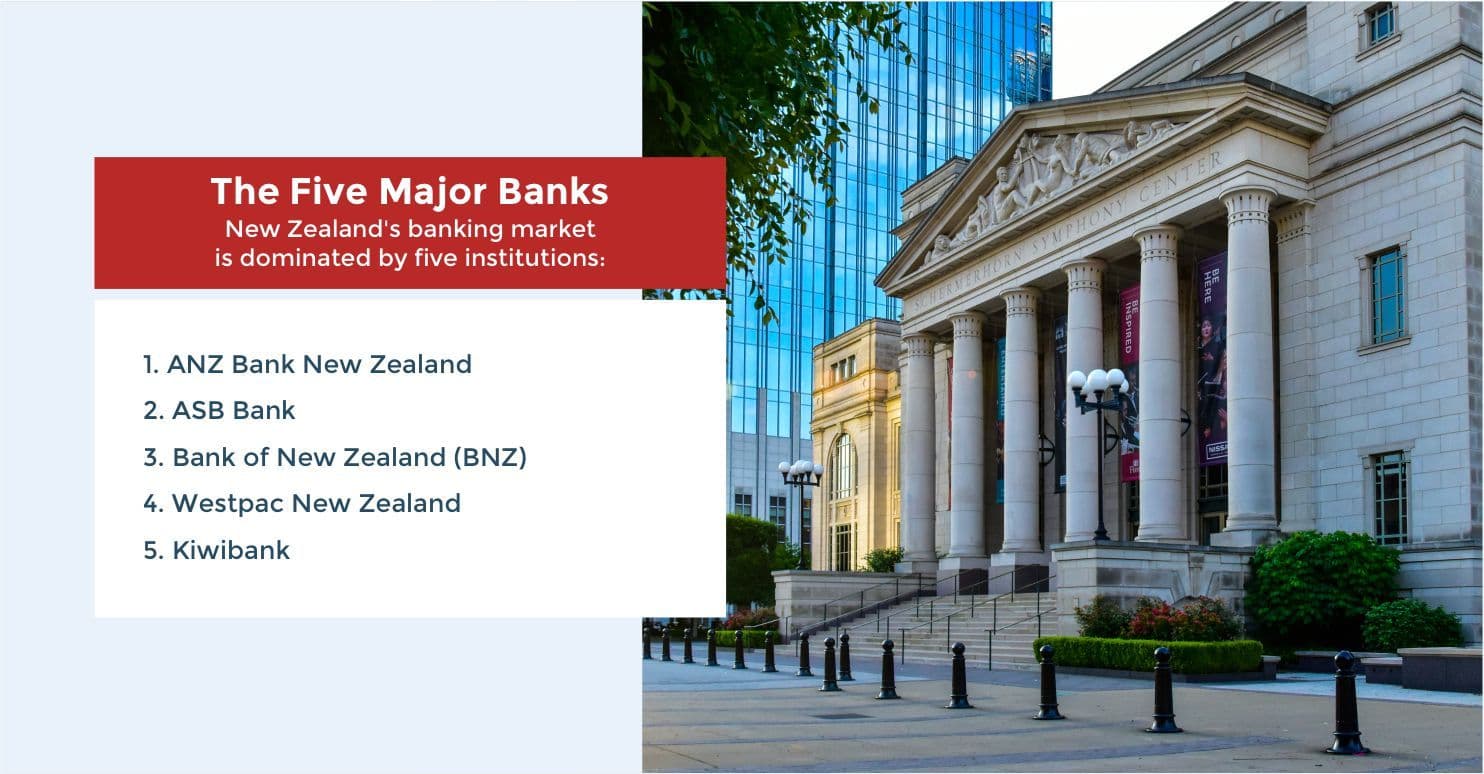
New Zealand's banking market is dominated by five institutions:
ANZ Bank New Zealand : The largest bank in NZ, a subsidiary of ANZ Group. Full retail banking, investment products, and a strong expat setup service. ANZ lets you open an account up to 90 days before you arrive. anz.co.nz
ASB Bank: Owned by the Commonwealth Bank of Australia. Popular with new migrants. ASB offers an offshore account opening service, you can start the process from the US with a certified passport copy and proof of overseas address, getting online banking access before you land. asb.co.nz
Bank of New Zealand (BNZ): Owned by National Australia Bank. Strong digital banking. Also allows pre-arrival applications. bnz.co.nz
Westpac New Zealand: 1.5 million customers. Solid everyday banking with strong digital tools. westpac.co.nz
Kiwibank: The only major New Zealand-owned bank, established in 2002 and now government-owned. Smaller branch network but competitive products. kiwibank.co.nz
Both ANZ and ASB actively market to arriving migrants and allow you to start the account setup process from overseas. For ASB, documents must be certified copies. For ANZ, the pre-arrival window is 90 days before your planned arrival date.
To open an account, you will need: a valid US passport, your visa, and proof of New Zealand address (either a signed tenancy agreement or a letter from your employer or future landlord). Once in New Zealand, you will also need your IRD number the New Zealand tax number to activate full banking features.
Apply for your IRD number through Inland Revenue online once you have arrived and have a valid visa.
Bank wire transfers between the US and New Zealand are expensive, fees of $25–$50 per transfer plus unfavorable exchange rates are common. Better options exist.
Wise (formerly TransferWise) uses the mid-market exchange rate and charges a transparent percentage fee, 0.5–1%. For regular salary transfers or large initial moves of savings, this is cheaper than bank wires.
OFX offers competitive rates for larger transfers (above $10,000) and is particularly popular for one-off large transactions like initial relocation funds.
Both services are legitimate, widely used by expats, and cheaper than bank-to-bank wires. wise.com, ofx.com
KiwiSaver is New Zealand's workplace retirement scheme. Your employer contributes 3% on top of your salary if you participate. That is free money. The problem, as covered in Section 9, is the US tax complexity. Before enrolling or increasing contributions beyond the minimum to capture employer matching, talk to a US expat tax advisor.
If you decide not to join KiwiSaver, opt out within the first 56 days of employment before you are automatically enrolled. After that window, you can still suspend contributions but cannot fully opt out until age 65.
Keeping your Fidelity, Schwab, or Vanguard accounts after moving to New Zealand is straightforward in theory. Some US brokerages restrict services to non-residents restricting new purchases while allowing the existing portfolio to remain. Schwab is basically most accommodating of expats. Check directly with your brokerage before you move.
Any gains from these accounts are still reportable on your US tax return. They may also be taxable in New Zealand, depending on the account type. Coordination between the two systems matters here.
Need help with your application or background check?
Contact us now and speak with a dedicated Globeia expert today.

