

Housing will likely be your largest expense and one of the more challenging parts of settling in Australia. Here’s what Americans need to know about renting and buying.
Moving to Australia from USA begin with renting, and that’s usually the right approach. Rentals are often unfurnished, which means essentials like a couch, bed, and sometimes even a fridge are not included. Lease terms are 6 or 12 months.
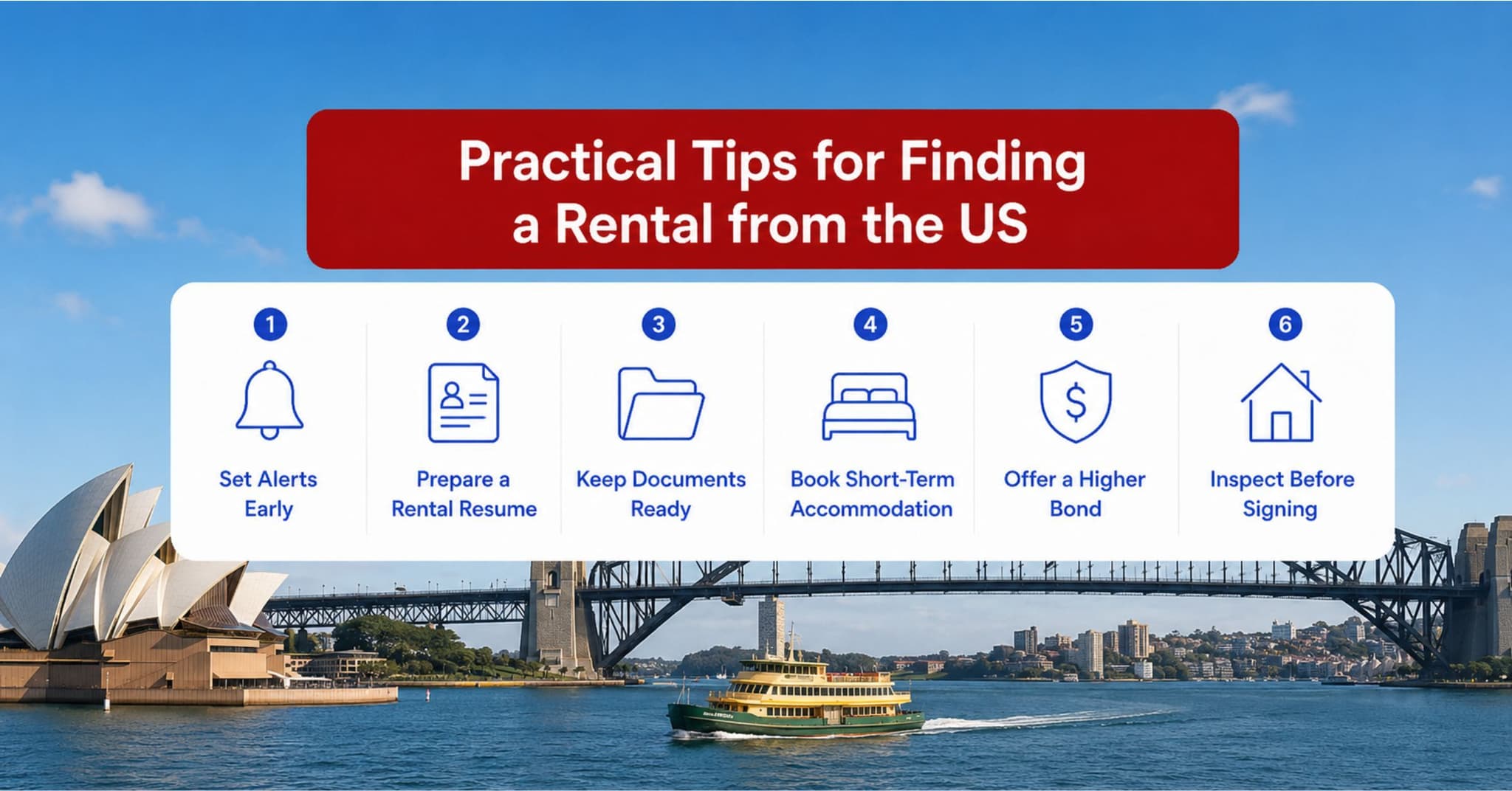
A standard bond (security deposit) is around four weeks’ rent. It is held by a state bond authority rather than the landlord, which provides legal protection. Rental markets in major cities are highly competitive. According to Domain’s September 2025 Rental Report, Sydney’s average weekly rent is $750 for units and $780 for houses, both record highs. Vacancy rates remain low across most capitals, and it’s common for multiple applicants to compete for the same property.Applications are assessed based on several factors: proof of income (usually at least three times the weekly rent), rental history, employment stability, and overall presentation. The main platforms for listings are Domain.com.au and Realestate.com.au. Nearly all available rentals are listed there, and applications are increasingly submitted online before inspections, which can be useful if you’re still overseas.Practical tips for finding a rental from the USAustralia has one of the least affordable housing markets in the world. PropTrack data shows affordability hit record lows in late 2024, with only 14% of median-income households able to afford a home, dropping to 10% in Sydney. It now takes the average Australian about 11 years to save a 20% deposit, and longer in Sydney.
For Americans, purchasing property depends heavily on visa status and foreign investment rules.Permanent residentsPermanent residents (including visas such as 189, 190, 186, 801, and 100) can buy property on similar terms to Australian citizens. They do not need Foreign Investment Review Board (FIRB) approval for a primary residence.Temporary residents and non-residentsTemporary visa holders and non-residents must apply for FIRB approval before purchasing residential property. Fees start at AUD $13,200 for properties up to $1 million (2025 schedule) and increase with property value. Temporary residents are limited to buying new dwellings or vacant land, rather than established homes.2025–2027 foreign buyer banFrom April 1, 2025 to March 31, 2027, foreign buyers, including most temporary residents, are not allowed to purchase established homes. The policy aims to ease pressure on housing availability for residents and first-home buyers.New dwellings and vacant land remain available with FIRB approval during this period, with some exceptions depending on visa type and property category.Key Property Market Figures
| City | Median House Price |
| Sydney | ~$1.4–$1.72 million |
| Melbourne | ~$800,000–$950,000 |
| Brisbane | ~$625,000–$850,000 |
| Perth | ~$700,000–$800,000 |
| Adelaide | ~$780,000–$830,000 |
| Hobart | Most affordable major capital |
Getting a mortgage as an American in Australia is possible, but comes with stricter requirements. Lenders do not consider your US credit history, instead they focus on your Australian credit file, income, visa status, and deposit size.
Most banks require at least a 20% deposit for expats without established Australian credit. Citizens and long-term residents with strong credit may qualify with smaller deposits. A stable employment history and at least two years of Australian tax returns significantly improve approval chances.FIRB approval is required before exchanging contracts for temporary residents, and processing takes around 30 days, which should be factored into any purchase timeline.Need help with your application or background check?
Contact us now and speak with a dedicated Globeia expert today.

