

Globeia
image
Guide

How to Apostille US Documents for Spain (Complete 2026 Step-by-Step Guide)

Chapters
What is a US Apostille and Why Does It Matter in Spain?Who Needs a US Apostille in Spain?Types of US Documents That Need an Apostille for SpainWho Issues Apostilles for US Documents? State vs Federal AuthoritySpain Visa Types and USA Apostille RequirementsEssential USA Apostille Guidelines: What You Need to Get RightOriginal Documents, Certified Copies and Notarized Copies- What You Need to Know for US ApostilleWhat is Notarization And Why Does It Matters?Three Simple Ways to Get Your US State Apostille for SpainHow to Apostille a Federal Document from the U.S. Department of State for SpainHow to Apostille Different U.S. Documents for Spain (Step-by-Step Guide for USA Applicants)FBI Background Check Apostille for Spain (Work Visa, Digital Nomad Visa & Residency)Other US Documents That Might need an Apostille for SpainKnow More About Sworn Translation for Spain and When It Is ImportantWhat Does the Apostille Look Like, and Will I Need One or More?Common Challenges When Apostilling U.S. Documents for SpainTips for Faster Apostille Processing (U.S. to Spain Visa & Residency Applications)How Much Does It Cost to Apostille a U.S. Document for SpainHow Long Will It Take to Have a U.S. Document Apostilled for Spain?
HomeGuidesHow to Apostille US Documents for Spain (Complete 2026 Step-by-Step Guide)How to Apostille a Federal Document from the U.S. Department of State for Spain
Chapters
feather iconAuthor
Ayushi Trivedi

How to Apostille a Federal Document from the U.S. Department of State for Spain

image

If the U.S. federal government issues your document and you need to use it in Spain, the U.S. Department of State must apostille it. The process isn't complicated, but each step matters.

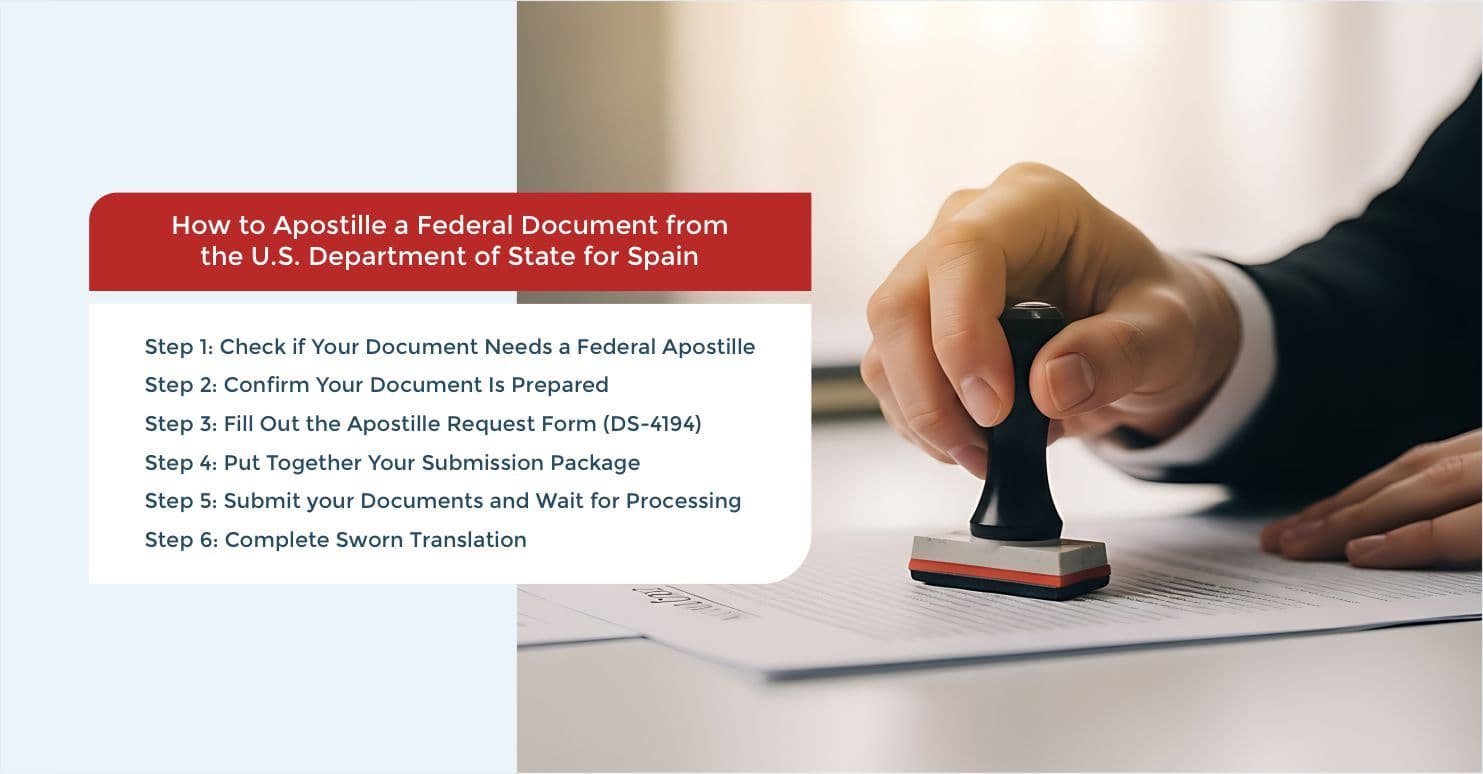
Step 1: Check if Your Document Needs a Federal Apostille

Before you do anything, make sure you send your document to the right place. Documents that U.S. federal authorities issue need a federal apostille, like an FBI background check or a federal court document. State offices cannot apostille these.

If your document comes from a state (like a birth or marriage certificate), then this process does not apply to you. Getting this step right saves you time and avoids rejection.

Step 2: Confirm Your Document Is Prepared

This step ensures your document meets the requirements before you send it. The U.S. Department of State accepts official, original, or certified documents. As an example, if you submit federal court documents, the federal courts must issue them. If you send a copy, printout, or document with incorrect certification, you will receive it back without an apostille.

Step 3: Fill Out the Apostille Request Form (DS-4194)

This form DS-4194 tells the Department of State what you're requesting and where the document will be used. You'll need to provide basic details like your name, contact information, and the country where the document will be used (Spain). You'll also list the type of document you're submitting. It's a simple form,m but accuracy is crucial; any mismatch between the form and your document can slow things down.

Step 4: Put Together Your Submission Package

Now you combine everything into one complete package. This includes your document, the filled form, payment, and a return envelope. Included in one envelope: your original FBI report or federal document, completed DS-4194 form, correct payment (check or money order), and a prepaid return envelope with your address. Do not staple 

Step 5: Submit your Documents and Wait for Processing

Once your package is ready, you send it to the U.S. Department of State in Washington, D.C. There are four ways to submit your application:

  • By Mail: Send your Federal documents like FBI checks, court records, or anything, with the form DS-4194 payment, and a prepaid return envelope to the U.S. Department of State in Virginia.
  • In-Person Drop-Off: Submit your completed form, original document, and payment in Washington DC to get faster processing.
  • Emergency Appointment: Provide proof of urgent travel or a life-or-death situation to receive same-day processing if approved.
  • Third-Party Service: Use a professional agency to handle submission of documents, payment, and tracking on your behalf.

Step 6: Complete Sworn Translation

Once you get your apostilled document, get it translated into Spanish by a certified (sworn) translator. This makes sure it has legal validity and acceptance by Spanish authorities for visa legal processes or consulate submissions.

PreviousThree Simple Ways to Get Your US State Apostille for Spain
NextHow to Apostille Different U.S. Documents for Spain (Step-by-Step Guide for USA Applicants)
In This Chapter
Share This Guide
Share This Guide

Need help with your application or background check?

Contact us now and speak with a dedicated Globeia expert today.

Contact us
Globeia LogoGlobeia is your simple and secure background checks and identity solution
Follow Us:
Links
Globeia.caPortal Fulfilment Policy
background vector
background vector
background img
©2026 Globeia.com. All rights reserved.
Terms & Conditions | Privacy Policy