

If you are applying for a Spanish long-stay visa from the UK, the word apostille will come up repeatedly and it is the areas where applicants make the most avoidable mistakes. A wrongly apostilled document, an expired certificate, or a document submitted without an apostille when one was required can result in your entire application being rejected. This section explains exactly what an apostille is, which of your UK documents need one, how to get them apostilled correctly, and the practical traps to avoid.
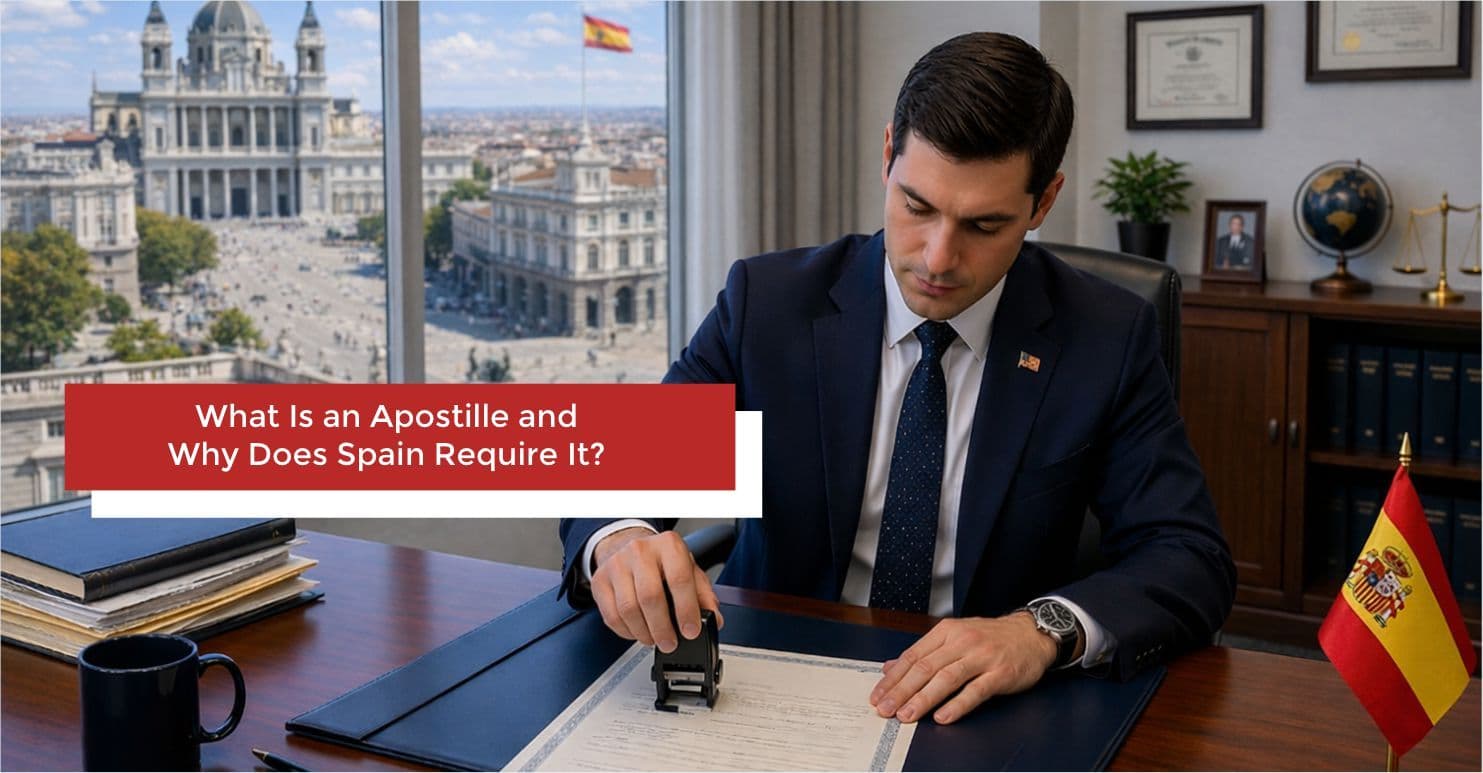
An apostille is an official authentication stamp or certificate attached to a public document that certifies the document is genuine and that the authority that issued or signed it is recognised. It does not verify the content of the document - it verifies that the issuing authority is legitimate.
The apostille system was created under the Hague Convention of 1961, an international treaty signed by over 120 countries, including both the UK and Spain. The convention established a standardised way for countries to recognise each other's official documents without requiring full diplomatic legalisation. Before the convention existed, getting a UK document recognised in Spain required going through both the UK Foreign Office and the Spanish Embassy, but this was a lengthy and expensive process. The apostille simplified this into a single step.
When the Spanish Consulate asks for an apostilled document, they are asking for proof that the UK authority who issued your document, whether that is the ACRO Police Certificate, a court, a registry office, or a university, is a genuine and recognised UK institution.
Not every document in your visa application requires an apostille, only those issued by UK public authorities. Private documents such as bank statements and insurance policies do not need apostilling. The following UK documents require an apostille for Spanish visa and residency applications.
In the United Kingdom, apostilles for England, Wales, and Northern Ireland are issued exclusively by the Foreign, Commonwealth and Development Office (FCDO) Legalisation Office. Scotland has its own process through the Scottish Government's Justice Directorate for documents issued by Scottish authorities.
The FCDO Legalisation Office has one physical location in the UK and handles all apostille requests either by post or by in-person same-day appointment.
The postal service
You send your original document to the FCDO Legalisation Office by post along with a cover letter, a completed application form from their website, and the fee. Current fees are £45 per document for the standard postal service. Processing time is approximately ten working days from receipt, though this can extend during busy periods. Use a tracked service when sending original documents by post, the FCDO is not responsible for documents lost in transit.
The in-person same-day service
The Milton Keynes office offers a same-day apostille service for documents brought in person. This is faster and useful if you are working to a tight consulate appointment deadline. It is important to note that the in-person same-day service requires a pre-booked appointment. You cannot simply walk in. Appointments are booked through the FCDO Legalisation Office website and availability varies. Book your appointment as soon as you know your consulate appointment date to ensure you have enough time.
What to send
The FCDO will only apostille original documents or certified copies issued directly by the relevant UK authority. They will not apostille photocopies, scans, or documents that have already been translated. The document must be in its original form as issued, so your ACRO Criminal Records Certificate, for example, must be the original printed certificate sent to you by ACRO, not a printed copy.
The apostille itself
The FCDO apostille takes the form of a certificate attached to or printed on the back of your document. It carries a unique reference number, the date of issue, the signature of the authorising FCDO official, and an embossed or printed seal. Spanish consulates verify apostilles by reference number if they wish to confirm authenticity.
Since 2021 the FCDO has been issuing digital apostilles (known as e-apostilles) for certain documents. A digital apostille is issued as an electronic certificate rather than a physical attachment, and documents apostilled digitally carry a verification code that can be checked online through the FCDO's verification portal.
Whether Spanish authorities accept digital apostilles is not uniformly consistent across all consulates and processes. The acceptance of these apostille varies by local authority. If you are given the option of a physical or digital apostille and you are applying for a Spanish visa or residency document, a physical apostille is the safer choice. If you have already received a digital apostille, check directly with your specific consulate before submission.
The Spanish Consulate will not process your application. In most cases they will identify the issue at the point of submission during your in-person appointment and return the document to you, which means you leave without your application being submitted and need to book a new appointment once the correct apostille is obtained. In some cases where the issue is only identified after submission, the consulate will contact you to request the corrected document but this delays the overall processing timeline.
If your ACRO certificate has expired before you manage to resubmit, you will need to apply for a new one and have it apostilled again, restarting that part of the process entirely. This is why getting the apostille process right the first time, with sufficient time built into your planning, is one of the most important administrative steps in the entire visa application.
Need help with your application or background check?
Contact us now and speak with a dedicated Globeia expert today.

