

Fingerprinting is the foundation of the entire U.S. Criminal Record Check process. Without an acceptable set of fingerprints, your application cannot be processed. This section covers how fingerprinting works, the difference between live scan and ink methods, where to get fingerprinted inside and outside the United States, how to complete the FD-258/FD-1164 card correctly, and how to avoid the errors that lead to rejection and delays.
The FBI's Identity History Summary process is fingerprint-based, not name-based. Names can be shared, changed, or misspelled. Fingerprints are biometrically unique to each individual and remain consistent throughout a person's lifetime.
When you submit fingerprints to the CJIS Division, they are compared against the Next Generation Identification (NGI) system, the FBI's primary biometric database holding records for over 150 million individuals. A fingerprint match is the reliable way the FBI can definitively link a submission to an existing criminal history record. It is also the reason a "No Record" result carries weight, it means no match was found in the federal database to your specific biometric identity.
This is also why fingerprint quality matters. Smudged, incomplete, or low-quality prints can’t be processed accurately and are often rejected, requiring resubmission and adding delays to your timeline.
There are two methods of capturing fingerprints for an FBI Identity History Summary request. But the right choice depends largely on where you are applying from.
Live Scan (Digital Fingerprinting)
Live scan systems capture fingerprints electronically using optical or capacitive sensors. The images are checked for quality at the time of capture and then submitted electronically- mostly through an FBI-approved channeler, reducing the risk of delays caused by mailing physical documents. This method is faster, produces more consistent image quality, and has a lower rejection rate because poor-quality prints can be retaken immediately. Live scan is widely available within the United States at authorized fingerprinting centers, but access outside the U.S. is limited.
Ink Fingerprinting
Ink fingerprinting involves rolling each finger onto the standard FD-258/ FD-1164 fingerprint card, which is then mailed either to the Federal Bureau of Investigation or to a channeler for processing. This method is accessible worldwide and can be completed through local police stations or private fingerprinting providers. Because the process is manual, it carries a higher risk of rejection due to smudging or incomplete prints. However, this risk can be reduced by using experienced, FBI-compliant fingerprinting providers who follow proper capture standards and check print quality before submission. Processing times can get longer due to shipping and handling.
Which method should you use?
If you are in the United States, live scan through an FBI-approved channeler is generally the better option due to speed and reliability. If you are outside the United States, ink fingerprinting on an FD-258/FD-1164 card is the standard approach, with the completed card submitted by mail for processing.
The FBI accepts two fingerprint card formats for Identity History Summary requests. The FD-258 is the traditional pre-printed card. The FD-1164 is an alternative that can be downloaded from the FBI website. This makes the FD-1164 particularly useful for international applicants who cannot easily source a pre-printed FD-258 card locally. Both formats are fully accepted by the FBI and carry the same field requirements and print quality standards.
The FD-258 is the FBI's standard fingerprint card for ink-based submissions. It contains designated boxes for 10 individually rolled fingerprints and plain flat impressions of all fingers taken. Errors on the card are one of the most common reasons submissions are rejected.
The FD-1164 is a printable fingerprint form available through the FBI and can be printed on standard paper, making it a practical option for international applicants who cannot easily obtain a pre-printed FD-258 card. The FBI accepts both FD-1164 and FD-258 fingerprint submissions for Identity History Summary requests, provided they are completed correctly and meet the FBI's fingerprint quality requirements.
You must complete all of the following fields:
Technical requirements for acceptable prints:
Where to obtain an FD-258/FD-1164 card:
Fingerprinting within the U.S. is widely available. Choosing the right option depends on your location, timeline, and application method.
FBI-Approved Channeler/Companies
Most of the FBI-approved channelers offer both live scan (digital fingerprinting) and ink fingerprinting options, depending on your location and preference. Live scan is faster, with fingerprints captured digitally and submitted electronically, reducing the risk of rejection due to quality issues. Ink fingerprinting is manual and is handled by experienced technicians who follow the FBI’s FD-258/FD-1164 standards and check print quality to avoid common errors like smudging or incomplete impressions. In both cases, fingerprints are prepared specifically for submission to the Federal Bureau of Investigation, ensuring they meet the requirements for an Identity History Summary request.
Local Police Stations and Sheriff’s Offices
Many local police departments and sheriff’s offices offer ink fingerprinting services to the public. Fees vary by location. This option is widely available, but because it is manual, print quality can depend on the technician’s experience. If you choose this route, bring your own FD-258 or FD-1164 card and confirm that the technician is familiar with FBI fingerprinting requirements.
Courts and Government Offices
Some state or county offices, courthouses, and licensing agencies also provide fingerprinting services. Availability varies by jurisdiction, so it’s best to check in advance.
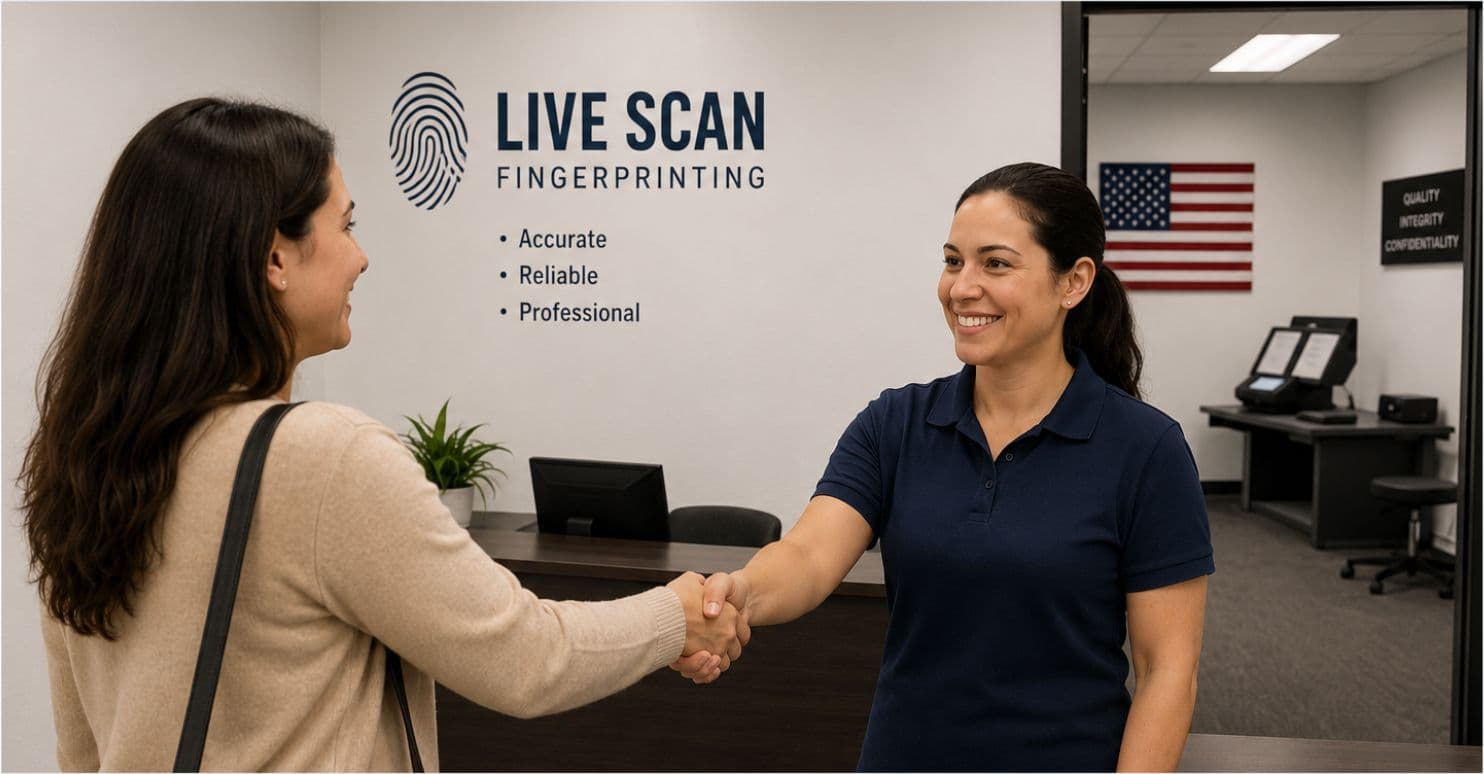
Getting fingerprinted abroad is feasible, but it requires some planning. Here are the most reliable options:
Local Police Stations
In many countries, local police stations can take ink fingerprints using an FD-258 card provided by the applicant, making this one of the most widely accessible options internationally. It is often affordable and easy to arrange, but the level of familiarity with FBI requirements can vary. Officers may not regularly work with FD-258 cards, which can lead to issues such as smudged prints, incomplete rolls, or misalignment. To reduce these risks, bring a clean card, carry clear instructions, and review each print carefully before leaving so any corrections can be made on the spot.
Private Fingerprinting Providers
Private fingerprinting companies operate in many major cities and often have experience with international background check requirements, including U.S. and Canadian submissions. They are more familiar with FBI standards and cards, which helps reduce the risk of rejection due to poor-quality prints. Some providers also offer end-to-end support including supplying the correct fingerprint cards, checking print quality, and even handling submission to the Federal Bureau of Investigation. But note that the costs are higher than local options, and service quality can vary, so it’s important to confirm their experience with FBI requirements before proceeding.
U.S. Embassies and Consulates
U.S. embassies and consulates do not provide fingerprinting services for personal background check requests, including FBI Identity History Summary applications. The U.S. Department of State explicitly excludes this from standard consular services. While isolated exceptions have existed historically at certain posts, they are not reliable or consistent, and planning your application around embassy fingerprinting is not advisable. Applicants outside the United States should use a local police station or a private fingerprinting provider experienced with FBI FD-258/FD-1164 requirements instead.
A good number of ink fingerprint submissions to the Federal Bureau of Investigation are rejected due to avoidable issues, most of which come down to print quality and handling.
If the FBI returns your submission as unclassifiable, the entire process must restart. You need to obtain a fresh FD-258/FD-1164 card. Then again schedule a new fingerprinting appointment and inform the technician of the prior rejection so they can adjust technique. Depending on how you applied, you also need to pay the processing fee again.
Some individuals like older applicants or those who perform manual labor, or with certain skin conditions- may have fingerprint ridges that are difficult to capture clearly. In cases of repeated rejections, applicants can contact the FBI’s CJIS Division to discuss next steps. In limited situations, the FBI may process a request using personal identifiers instead of fingerprints, but this is handled on a case-by-case basis and is not a guaranteed alternative.
Need help with your application or background check?
Contact us now and speak with a dedicated Globeia expert today.

